


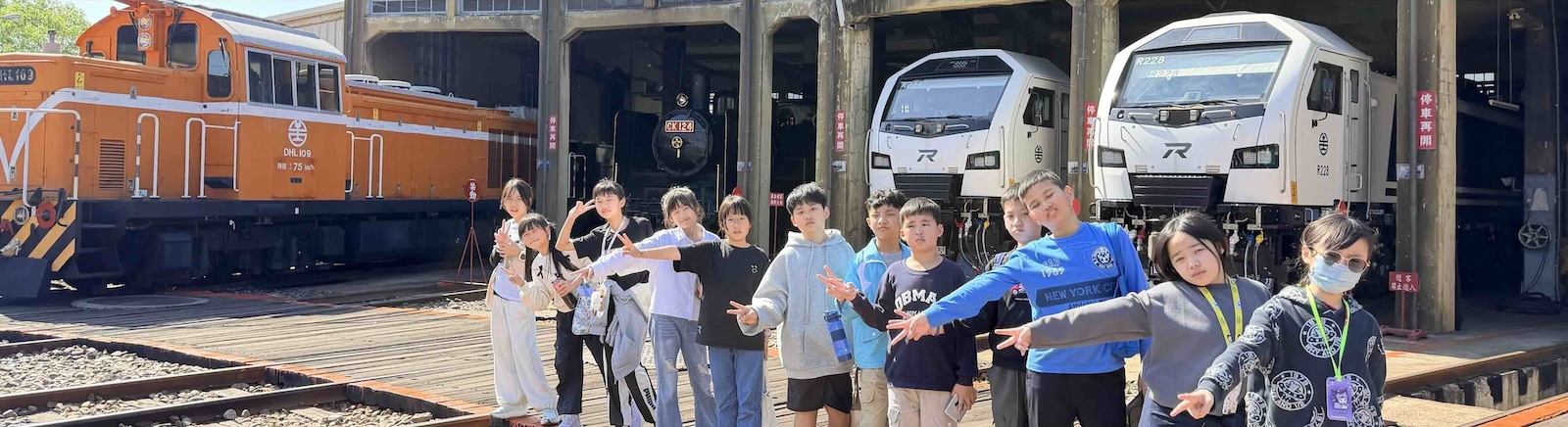


Besides its charming historical atmosphere, what is most amazing about the Changhua Roundhouse is its demonstration of the ultimate spatial utilization and mechanical wisdom of early railway engineering. It is not just a parking lot for trains, but a "large maintenance plant" and "dispatch center" that keeps the railway running smoothly. Here is a detailed breakdown of the structure and actual functions of this unique building:
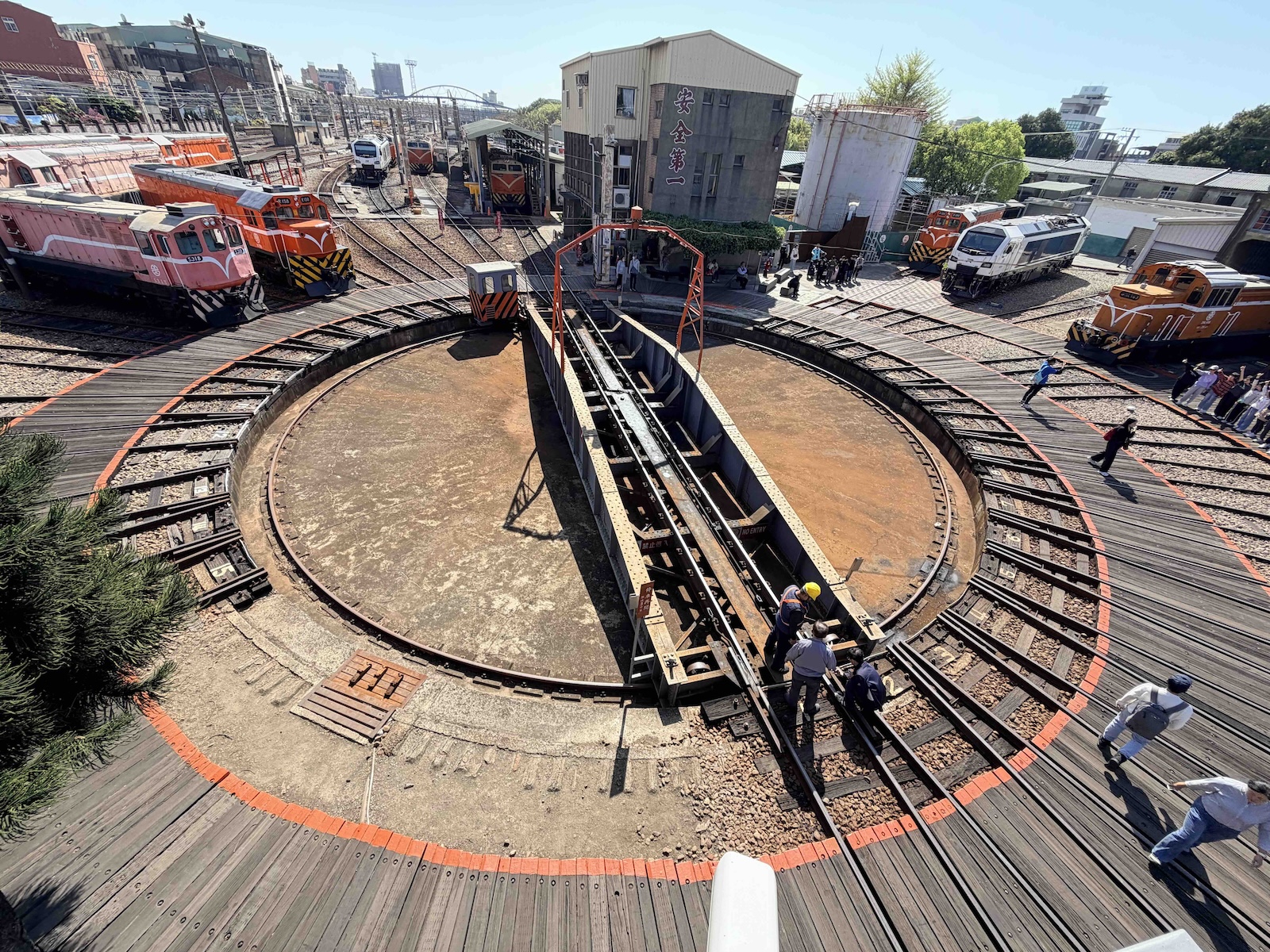 The 360-Degree Turntable.
The 360-Degree Turntable.This is the most eye-catching and important core facility in the park. Early steam locomotives and some diesel locomotives were unlike modern electric multiple units that have driver's cabins at both ends; they were typically "unidirectional." When a train needed to turn around or enter a specific maintenance bay, it would drive onto this giant metal disc. By rotating the turntable, dispatchers could easily and precisely "turn around" a locomotive weighing tens of tons or send it down a designated track.
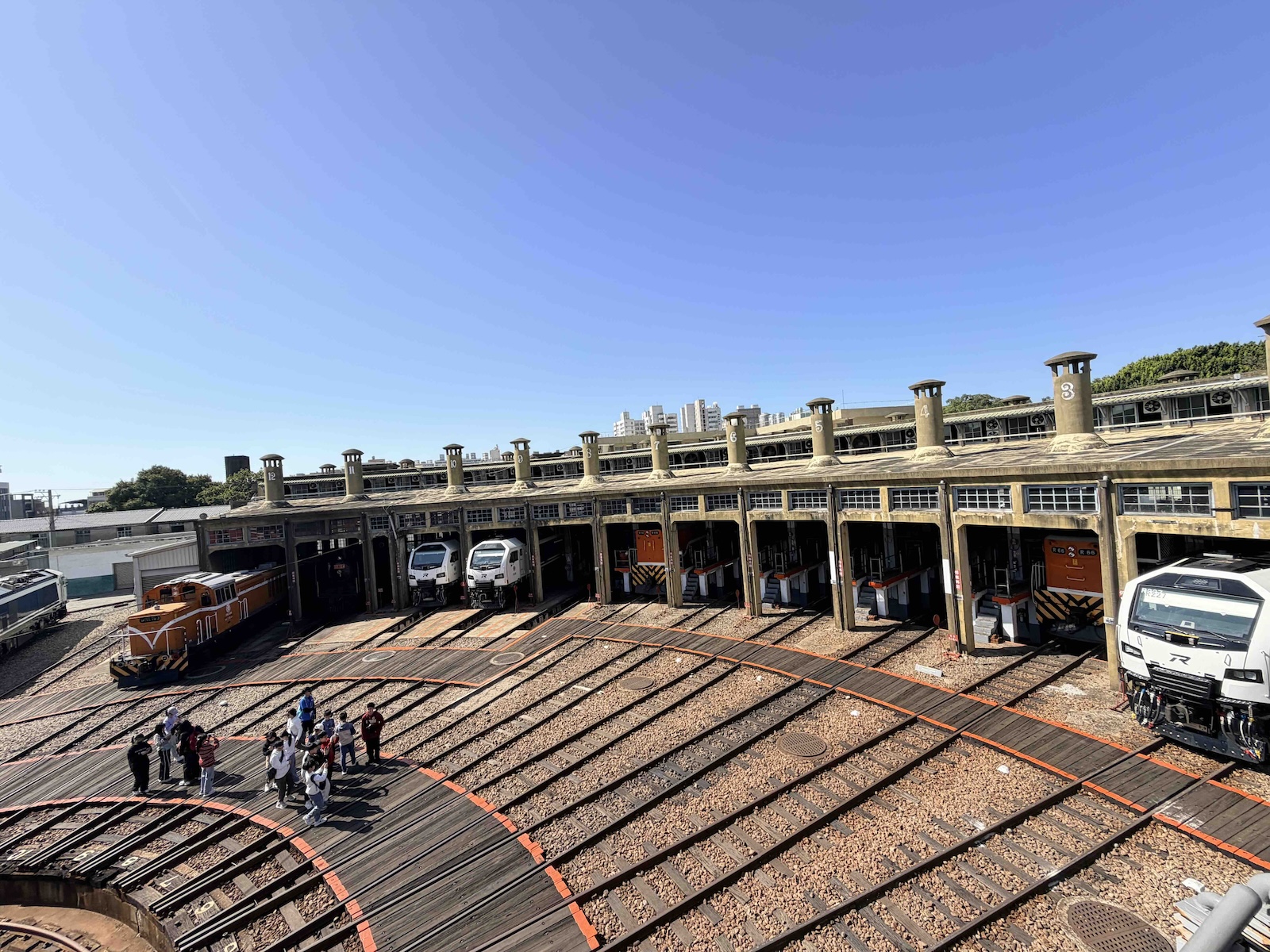 12 Radiating Tracks
Centered around the turntable, 12 tracks radiate outwards in a semi-circle (fan shape), connecting to 12 independent indoor garage spaces. This radial design creates the maximum number of non-interfering maintenance tracks within a limited land area. Each track acts as an exclusive "guest room" and "clinic," allowing long-journey locomotives to receive daily maintenance, oil changes, or even major overhauls here.
 Inspection Pits
Walking inside the roundhouse, you will find a deep trench dug under the tracks where the trains are parked. This is the "inspection pit" specifically designed for maintenance personnel. Once a train is properly positioned in the garage, mechanics can safely walk into the pit to carefully inspect the complex mechanical parts, drive shafts, and braking systems of the train's undercarriage from below, ensuring absolute safety for the next journey.
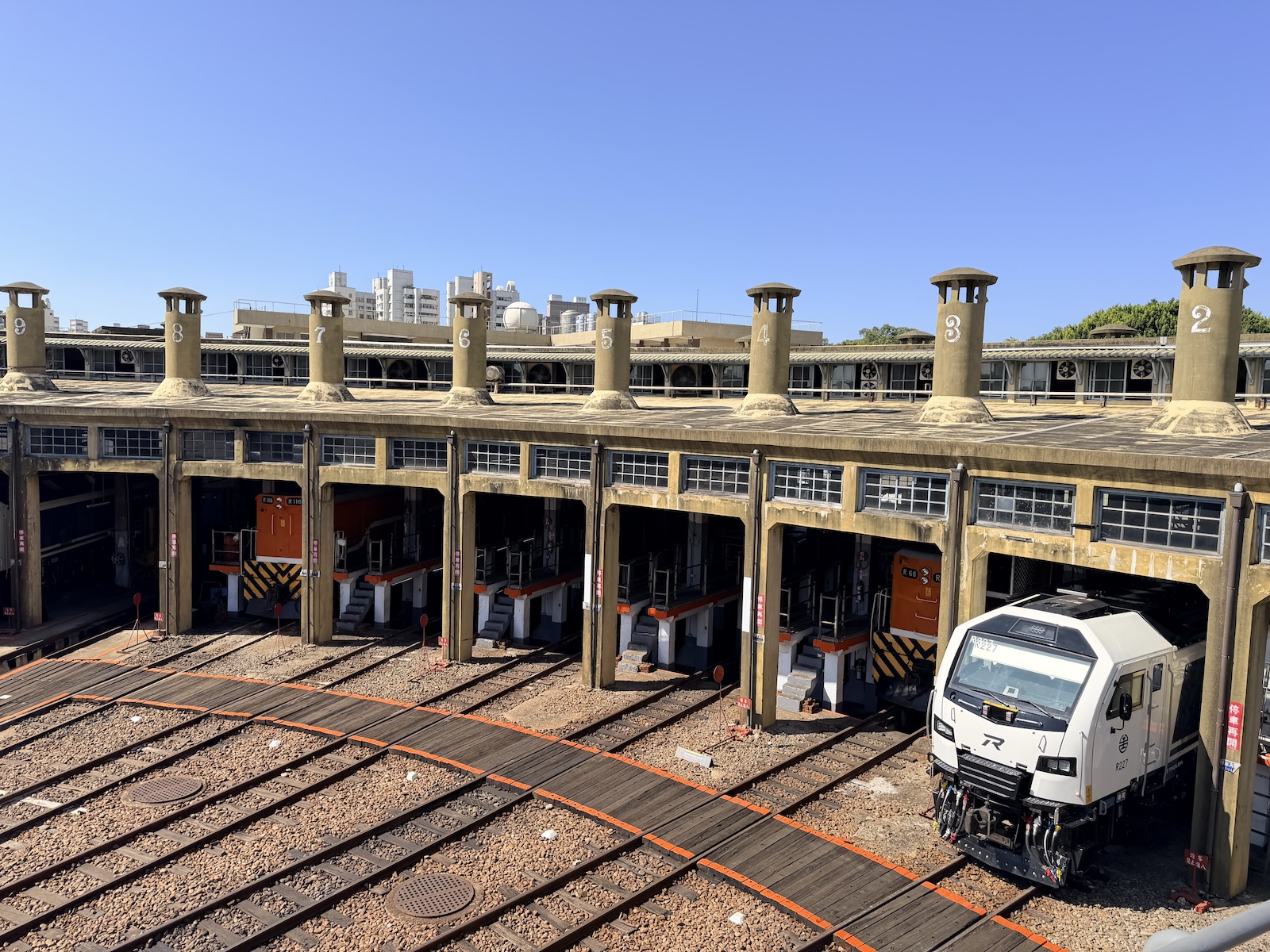 Exhaust Chimneys and Skylights
Looking up at the roof of the roundhouse, you will see two small chimneys protruding above each track. This was necessary because early steam locomotives emitted thick black smoke during maintenance, firing up, or starting. The chimney design allows exhaust gases to vent smoothly, maintaining ventilation inside. Additionally, the roof features large glass windows that bring ample natural light deep into the garage, providing mechanics with excellent visibility for precise maintenance work during the day.
The 360-Degree Turntable.
The 360-Degree Turntable.This is the most eye-catching and important core facility in the park. Early steam locomotives and some diesel locomotives were unlike modern electric multiple units that have driver's cabins at both ends; they were typically "unidirectional." When a train needed to turn around or enter a specific maintenance bay, it would drive onto this giant metal disc. By rotating the turntable, dispatchers could easily and precisely "turn around" a locomotive weighing tens of tons or send it down a designated track.
12 Radiating Tracks
Centered around the turntable, 12 tracks radiate outwards in a semi-circle (fan shape), connecting to 12 independent indoor garage spaces. This radial design creates the maximum number of non-interfering maintenance tracks within a limited land area. Each track acts as an exclusive "guest room" and "clinic," allowing long-journey locomotives to receive daily maintenance, oil changes, or even major overhauls here.
Inspection Pits
Walking inside the roundhouse, you will find a deep trench dug under the tracks where the trains are parked. This is the "inspection pit" specifically designed for maintenance personnel. Once a train is properly positioned in the garage, mechanics can safely walk into the pit to carefully inspect the complex mechanical parts, drive shafts, and braking systems of the train's undercarriage from below, ensuring absolute safety for the next journey.
Exhaust Chimneys and Skylights
Looking up at the roof of the roundhouse, you will see two small chimneys protruding above each track. This was necessary because early steam locomotives emitted thick black smoke during maintenance, firing up, or starting. The chimney design allows exhaust gases to vent smoothly, maintaining ventilation inside. Additionally, the roof features large glass windows that bring ample natural light deep into the garage, providing mechanics with excellent visibility for precise maintenance work during the day.
